The Proud and the Bashful collectors
The Museum of InnocenceThe Proud and the Bashful collectors are two ways of understanding why people gather objects and what they believe a collection is for. In Kemal Basmacı’s account, the Proud treat public display, ultimately in a museum, as the natural destination of collecting; the Bashful collect privately, often from pain or compulsion, and conceal their holdings because their society reads the collection as evidence of a wound. The distinction explains both the social isolation of Istanbul’s collectors and Kemal’s attempt to turn his own private attachment to objects into a museum that visitors can enter.
The Two Kinds of Collector
Kemal describes the Proud as collectors who take pleasure in showing their collections to the world, a disposition he associates especially with the West. They understand a museum as the culmination of collecting: whatever purpose an object first served, it can become part of a collection intended for public exhibition. An American museum brochure supplies his example of this outlook. Its account follows a collector who begins with one soda can picked up on the way home from school, adds more, and eventually aims to collect them all and exhibit them in a museum. In this model, accumulation develops toward visible completion and public recognition.
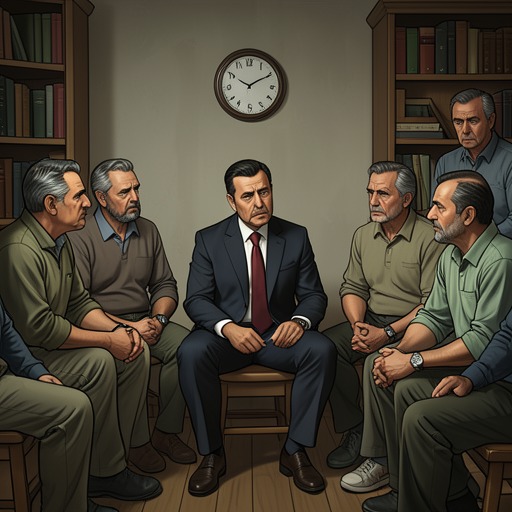
The Bashful, by contrast, collect for collecting’s sake and hide what they have gathered. Their collecting may begin with a wish for an answer, consolation, or relief from a difficulty, or with a compulsion whose cause remains obscure. Where the surrounding culture does not credit collecting as a respectable contribution to learning or knowledge, a collection does not confer status on its maker. Instead, it points back toward the collector’s private distress. Secrecy is therefore not simply a preference about display: it reflects the shame attached to the activity and the fear that other people will interpret the objects as signs of personal trouble.
Collecting and Shame in Istanbul
Kemal encounters this embarrassment while searching for film memorabilia in Istanbul in early 1992. He wants posters, lobby photographs, and ticket stubs from films he saw with Füsun during the summer of 1976, intending to display them in the Museum of Innocence. The objects have a specific place in his remembered life with her, but the people who own such material do not necessarily treat their collections as something to exhibit. During a long negotiation, Hıfzı Bey sells him lobby photographs and speaks of his collection with evident pleasure, yet the encounter also exposes the wistfulness and self-consciousness that can accompany a collector’s pride.
Other holdings make clear how varied the practice is. Kemal seeks postcards of streets and neighborhoods he visited with Füsun, and exhibits a collection of doorknobs and keys because their owner connects them to the many door handles touched during a lifetime, including those that might have been touched by someone he loved. Siyami Bey spends thirty years collecting photographs of ships that passed through the Bosphorus and gives Kemal duplicate images. Kemal can use them to evoke vessels whose whistles accompanied his thoughts of Füsun or their walks through the city. Another collector supplies small paper portraits once worn at funerals. The objects differ, but their value depends on the histories and attachments their collectors perceive in them, not merely on their ordinary use.
The social cost of concealment appears starkly in the story of Necdet Adsız, a Tophane resident who died beneath the accumulated belongings in his home in December 1996. He was not discovered until four months later, and newspaper accounts of his death intensified public apprehension about collectors. Kemal recognizes him as the same Necdet Füsun had mentioned at the end of the engagement party at the Hilton, believing that her acquaintance had died. The episode gives the distinction a grave edge: private accumulation can be dismissed as eccentricity, but a collector’s isolation and the public’s scorn can make that life difficult to see until its absence becomes impossible to ignore.
Kemal’s Position Between Privacy and Display
Kemal is not outside the Bashful collectors’ predicament simply because he is wealthy. He hopes that transforming the Keskin Family Home into a museum will let others understand his collecting as a deliberate public project rather than as evidence of a secret psychological wound. When Nesibe the seamstress moves to Nişantaşı and the architect İhsan begins adapting the house, people gossip that Kemal is making a private museum as in Europe, while also explaining the enterprise by pointing to his money. The explanation offers a socially acceptable alternative to the possibility that he is collecting to soothe a troubled heart, but it does not erase the vulnerability behind his undertaking.
At a meeting of the Lovers of Collectible Objects Association, then Turkey’s first such group, Kemal feels treated as an outsider among collectors who are themselves accustomed to stigma. The gathering takes place in a rented wedding salon. Suspicious, mostly silent looks leave him feeling that he is a leper among other lepers. Hıfzı Bey later suggests that the other collectors’ reaction arose partly because seeing a rich man use objects to comfort his heart unsettled their belief that wealth ought to have cured the impulse. Kemal’s experience reveals that the Proud and Bashful are not simply separate populations: an openly displayed collection can still expose the emotional need that its owner shares with collectors who hide theirs.
The Museum as a Change in Meaning
Kemal’s museum attempts to reverse the social meaning of private possessions. He brings his collection into the converted building and places the bedframe, mattress, and blue sheet associated with his first sexual encounter with Füsun at the Merhamet Apartments in the attic. The attic, once a neglected space, has been made clean and bright, with a skylight. Kemal sleeps there among the objects that recall Füsun, using the museum both as an exhibition and as a dwelling. He describes the building as a place where time becomes space: his collection gives physical form to memories that would otherwise remain private and sequential.
His project also challenges the assumption that a museum must be detached from intimate life. Kemal’s mother accepts the collection as a way for him to bear the pain of losing Füsun, and contributes old clothes, hats, handbags, knitting materials, buttons, and fabric swatches. Everyday possessions enter the museum not because they are rare or useful, but because they belonged to people whose lives matter to the collector. The museum does not remove the sorrow attached to them; it gives that sorrow a visible arrangement and an audience.
Kemal makes this conversion explicit in his conversations with Orhan Pamuk. He argues that objects that bring their owners shame can become possessions in which they take pride when displayed in a museum. He wants the guards to explain the history of his collection, his love for Füsun, and the meanings he has placed in her belongings, rather than merely police visitors. He also proposes that the museum remain welcoming to lovers and that visitors be able to see the entire collection from wherever they stand. In his design, display is not a claim that collecting has become emotionally neutral. It makes the private motive legible and turns the collector’s formerly concealed attachment into a shared account.
Significance of the Distinction
The Proud and the Bashful describe more than two attitudes toward exhibition. They identify a social difference in how collecting is recognized: in one setting, a collection may be treated as knowledge and a basis for public pride; in another, it may be taken as proof of embarrassment, excess, or distress. Kemal’s account ties that difference to cultural judgments about modernity and respectability. The affluent Istanbul world around him also gives objects public status: at the Şanzelize Boutique, imported goods and imitations circulate among wealthy customers, and Sibel rejects a handbag for the engagement party because it is not a genuine Jenny Colon. That episode is not collecting, but it shows how an object’s public meaning can depend on the distinctions society attaches to it, rather than on the object alone.
Kemal’s museum offers no simple escape from these judgments. Its public form depends on his money, yet its contents and purpose disclose a private grief; its display seeks pride without pretending that the underlying attachment has disappeared. The two collector types therefore remain in tension within the museum itself. By making visible the objects and memories that a Bashful collector might hide, Kemal tries to change shame into a form of shared recognition—and to make the museum a place where an intimate history can be seen without being reduced to a diagnosis.